Prova Aperta
March 8, 2009
Originally published in Pinball People, March 2009, and re-posted here.
Carl Maria von Weber
Oberon, Ouverture
Felix Mendelssohn-Bartholdy
Concerto in E minor, opus 64 for violin and orchestra
Robert Schumann
Symphony no. 4 in D minor, opus 120
It’s rare that one gets to see the workings of an orchestra laid bare, especially under the direction of a maestro as fine as Leonidas Karakos, but La Scala opened its doors on a clear Sunday night and offered up the prova as a benefit to a local children’s hospital. For the players and the maestro it was all business, but for the audience, it was an occasion not only to hear some fine German romanticism but also to get a glimpse of Karakos’ unique style.
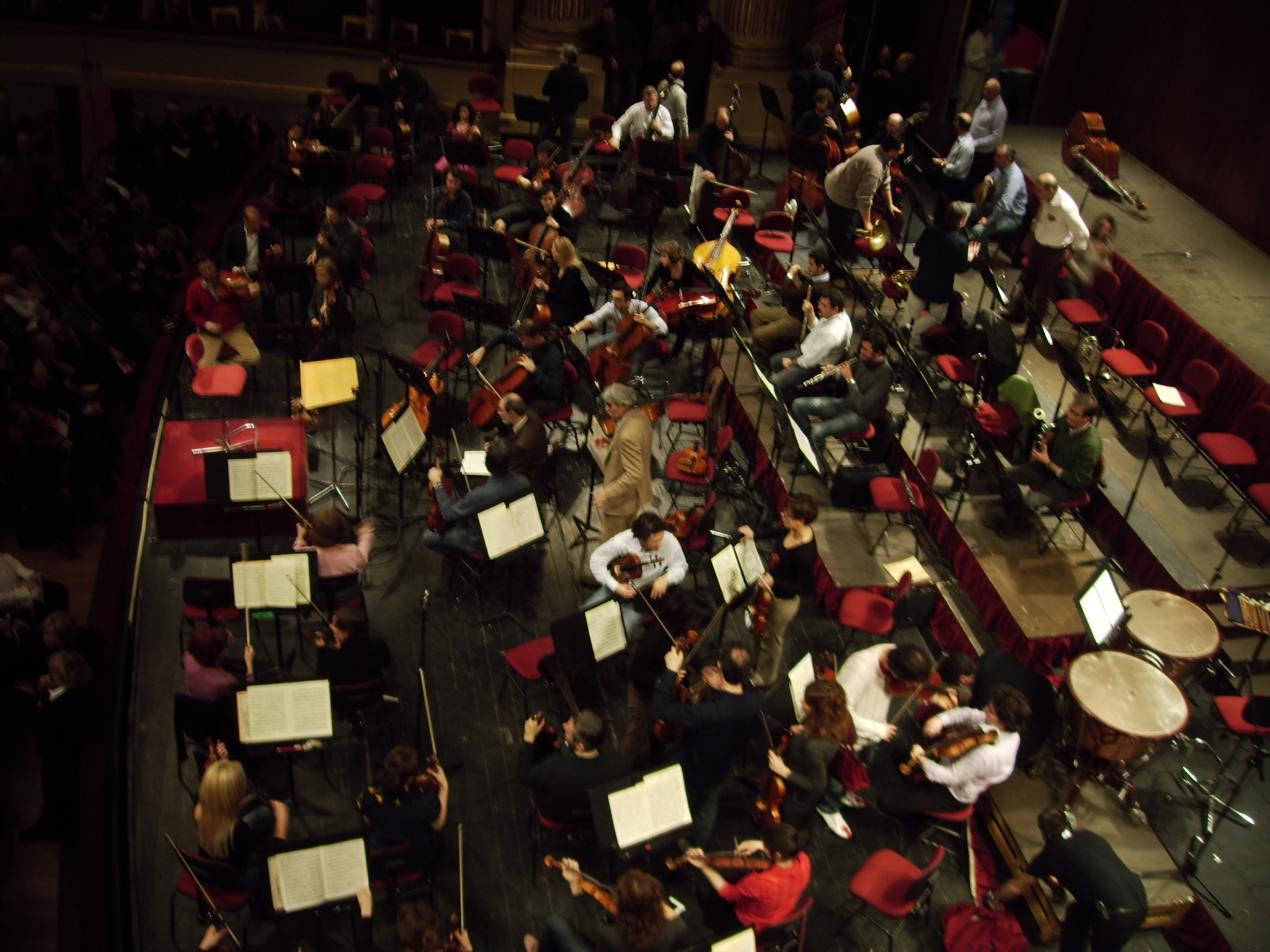
This time we even got our own palco, right above stage left. The musicians were strolling around the stage in street clothes, and we watched timpanist Jonathan Scully and French horn player Renato Duca tune their instruments. We were amused by just how casual the clothes were – especially in Milan – as we watched a first-violinist strip down to a red t-shirt and another enter in sneakers. An oboist was taking a cell phone call when maestro Kavakos emerged.
Kavakos is, as our program affirmed, a “rare talent and virtuoso,” and I was eager to see how he would both direct and play violin simultaneously. He mounted the podium and turned to face the audience, and the orchestra launched into the overture from Weber’s “Oberon.” The maestro played the first solo on his 1692 Stradivarius, turned to wave his bow a bit and the orchestra, and then resumed. His playing is fluid and graceful, and he paused often to eye his own first chair violin before leading the entire string section into some pizzicato parts. It’s a nice choice for a starting piece, affording the chance for Kavakos to play a long, delicate solo before concluding.
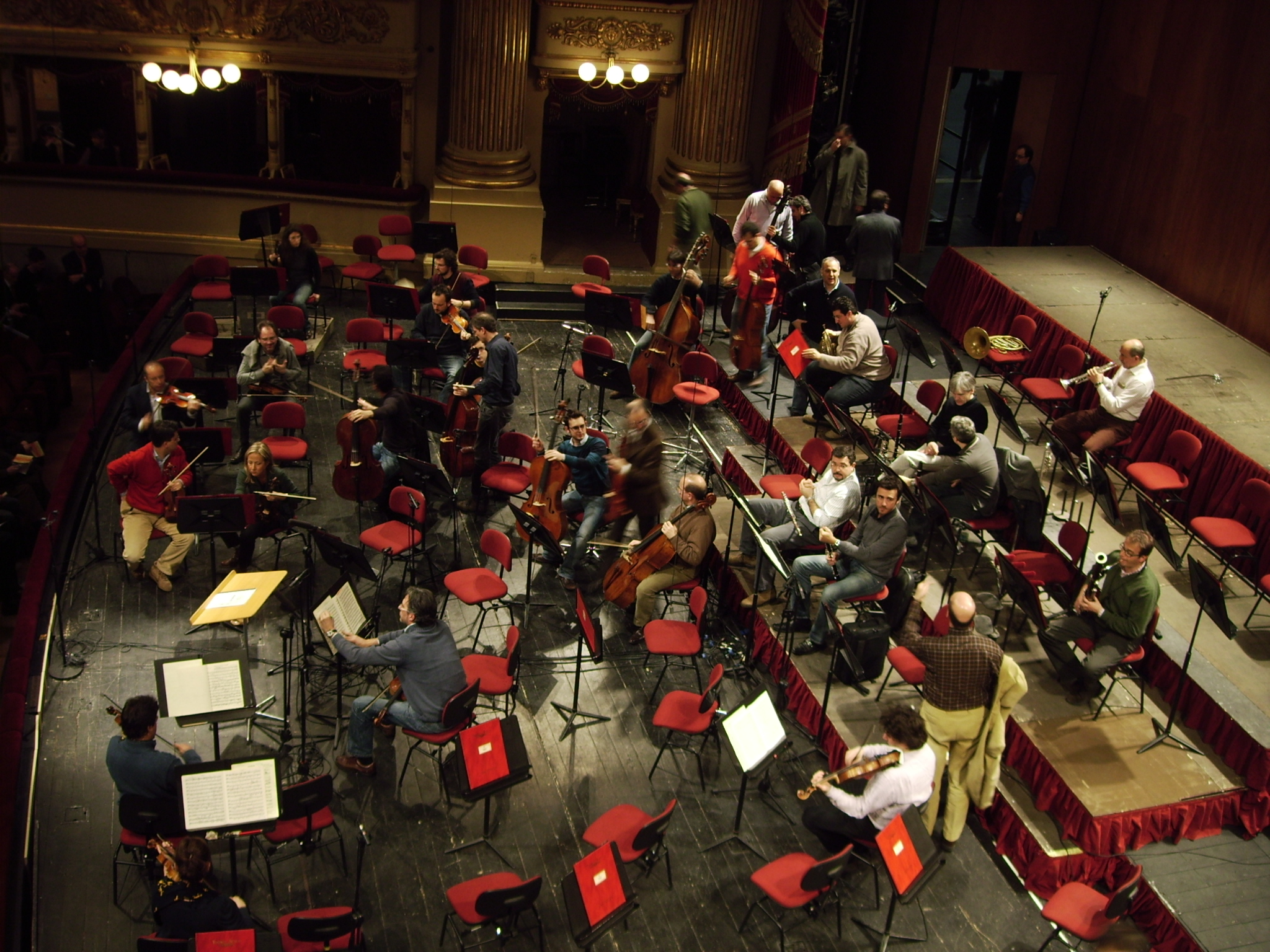
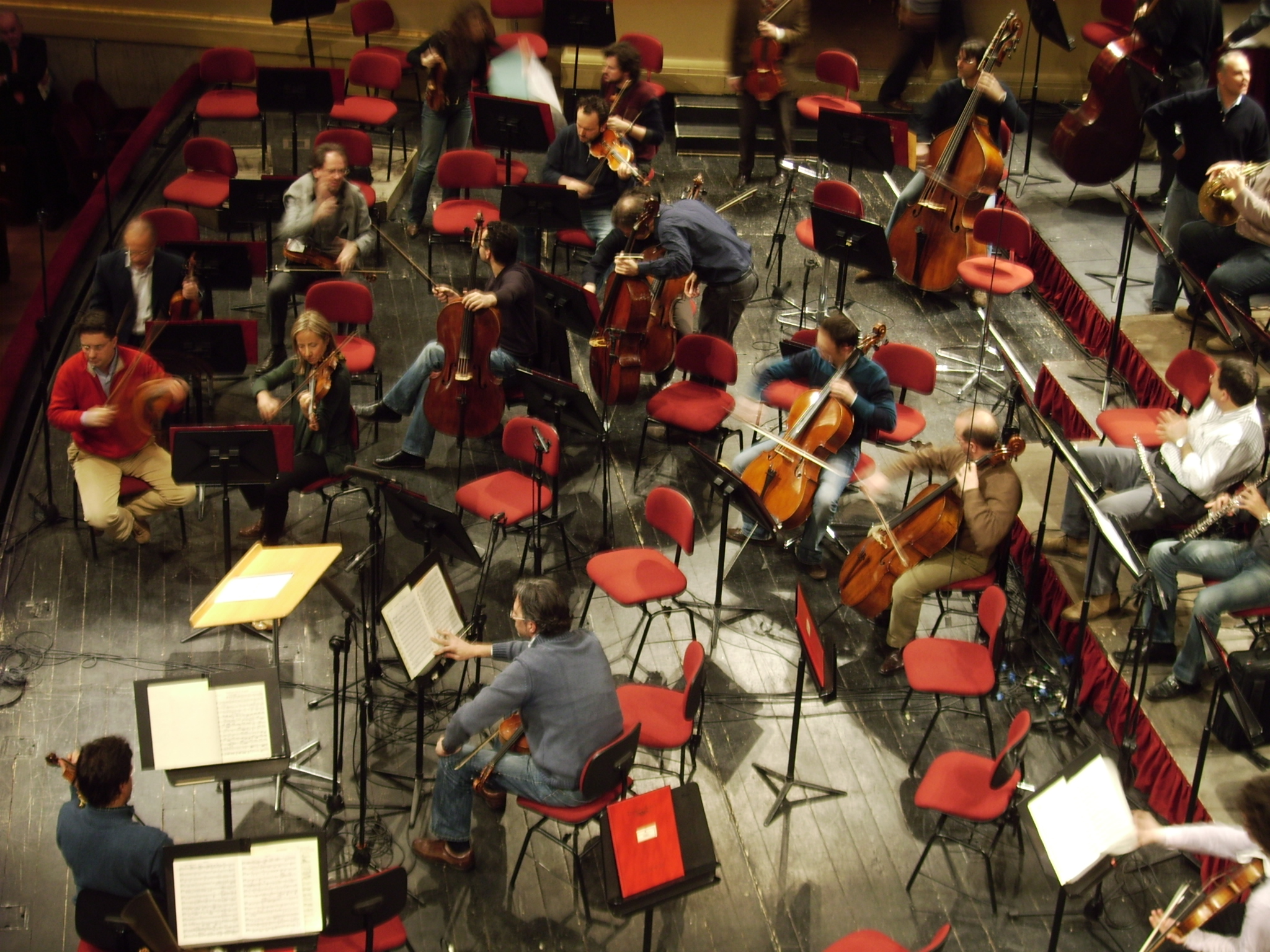
The audience is satisfied but the maestro is not. He gives direction mainly to the cellists with a liberal mix of humming and basic Italian – “a bit more of this [hums], not so much like that [hums again]. The cellists pass a pencil and dutifully make notes on their shared scores. The piece resumes, but stops again to that Kavakos can direct, gently, the timpanist. Then it’s turn of one of the oboists, who is meticulously instructed to hold out a long, wavering note for three more beats so that the rest of the orchestra can follow the transition. The young maestro is kind but firm and the oboist repeats it until he is satisfied. The oboist leads the orchestra back into the end of this bit of hearty German Romanticism, Kavakos takes off again, stooping down into his instrument, stopping and then directing with his bow, lunging like a fencer. The audience is again pleased, and there are shouts of “bravo!”
But he is a perfectionist, we are to learn. Back to the timpani. When they come in, he tells Scully, they must be “like a surprise.” At this point, the audience is with the orchestra. The oboes do their part perfectly and merit a “grazie” from the maestro as the piece carries on.
By the fifth run-through, I’m trying to pick out the theater’s in-house quartet, who are listed in the program but who don’t seem to be onstage this particular night. Suddenly the maestro proclaims the orchestra “bravi,” the bows tap, and applause somewhat wearily follows.
There’s a brief pause, not really formal enough to be an intermission, and Kavakos is back, this time without violin. His baton is delicate and finely pointed, and he leads the orchestra through all four movements of lengthy Mendelssohn’s Concert in E Minor. Amazingly, he has only given out direction once through the entire piece, and I can’t help but wonder if he wanted just to show us how meticulous he was with the Weber piece. Even if it’s only a rehearsal, it’s still on a stage.
Such is not the case, though, as he puts down the baton and begins to page through the score. The second violins are first up. “Please, a little bit more of this,” and then he enunciates the phrasing, not really a hum but more “Pa-PA-pam-pam.” They play the troublesome bravura again. “That’s fine… but this [hums] is a bit agitato. And this movement is, after all, allegro appassionato.
Kavakos takes the orchestra back to measure 655 and we begin anew. It’s really fascinating to note, though, that Kavakos, although he seems quite comfortable in Italian, mainly uses his hand, his mouth, and his baton to communicate, ever-exactly, what he wants from the orchestra. And so it should be, it is, after all, music.
Again, out of seemingly nowhere, there’s a “grazie mille!” and applause commences. It’s 10:30; the rehearsal has been going on two and a half hours. The orchestra just stands up and clears the stage, it’s that simple. The maestro says “a domani!” Tomorrow the Filarmonica della Scala would do it all over again. No one seems to mind the omission of the Schumann symphony. The first-run through of the Mendelssohn was worth the ticket price alone – which went to a worth cause anyway.
The casualness didn’t end after the show. Out in the piazza, a woman rushed past us, case in hand, to a stand of Vespas and motor scooters.