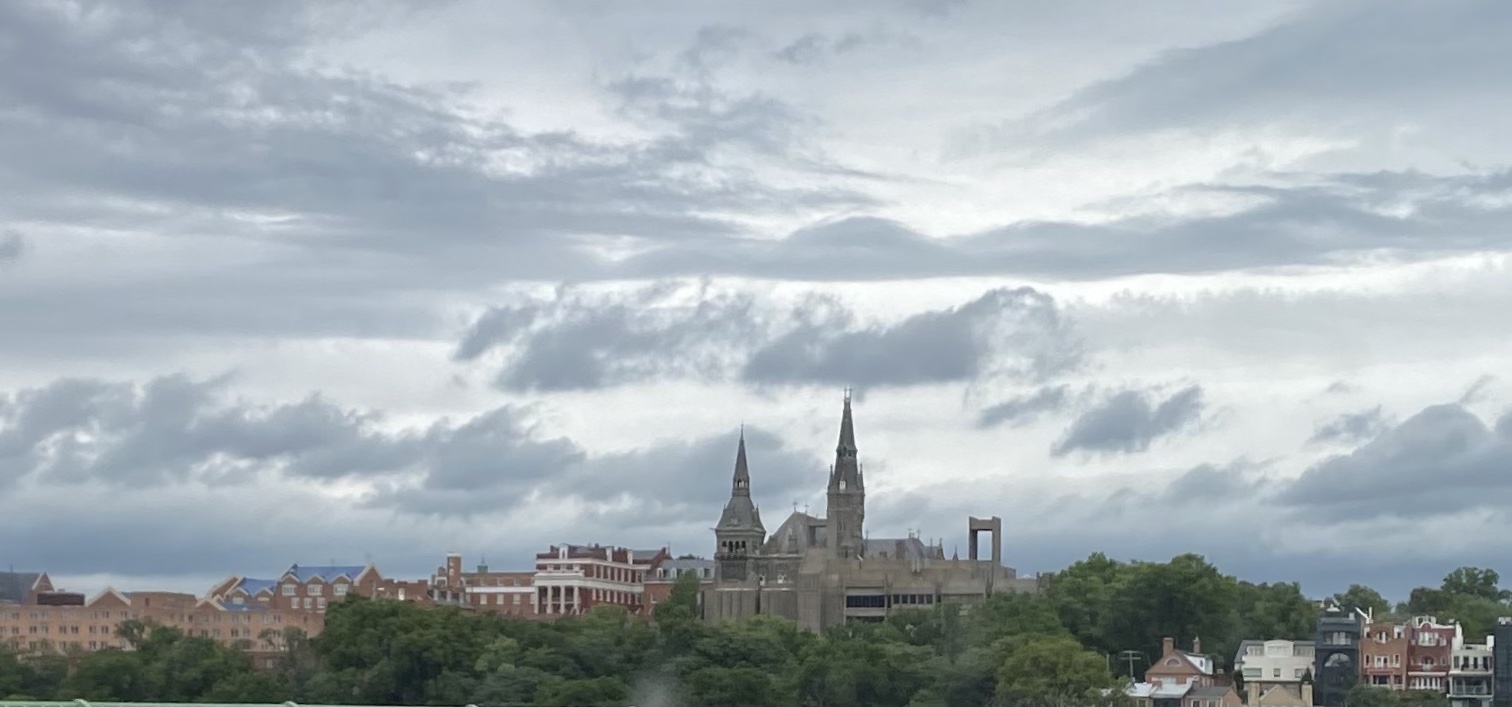
Holy Trinity Catholic Church, Georgetown
July 21, 2026 • 7:00 p.m.
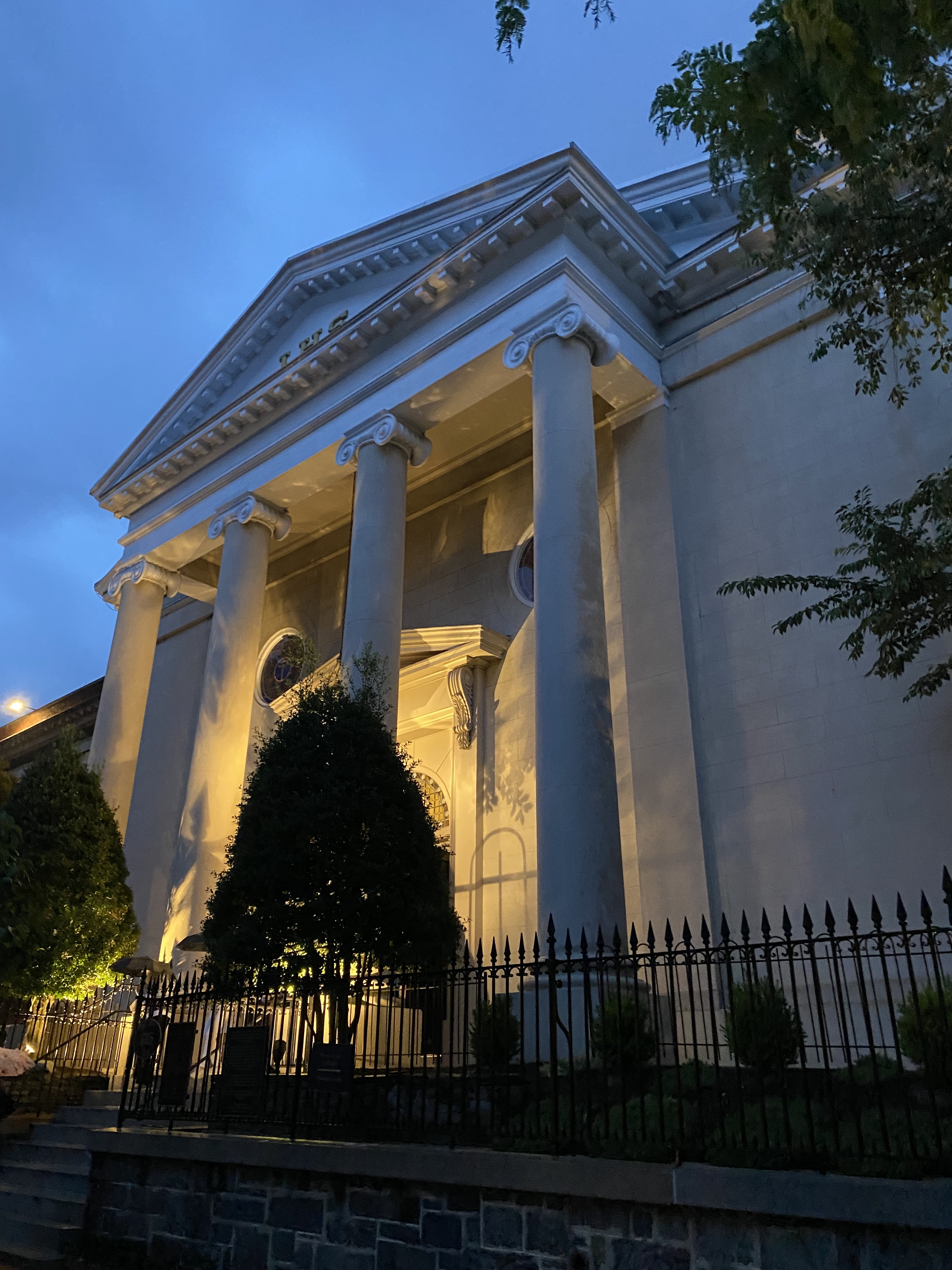
Last night saw a series of bravura performances by a talented group of young people at Georgetown’s Holy Trinity Church courtesy of Wolf Trap Opera’s Studio Artists. The Georgetown church itself was part of the experience: its chamber-like acoustics were nearly an additional instrument, amplifying the voices of the singers without overdoing it or producing any odd effects (not the case for the jazz drummers at a recent Sunday service at the National Cathedral).
The evening began with a reminder that Holy Trinity was the church of John F. Kennedy, followed by somewhat-inevitable observation that Wolf Trap will continue presenting concerts there until whatever is figured out with the Kennedy Center. Some laughs and groans were heard. A few recipients of Wolf Trap’s master class in Tuscany who were present — one woman and three men — were asked to stand to thunderous applause. Eventually the presenter himself mercifully noted, “enough talking.”
Then it was on to the Wolf Trap Opera Studio Artists, singers who can serve as covers or take smaller roles in the Filene Program while gaining the experience of working in a professional opera environment. They took the stage with no delay, accompanied only by a pianist (either Tzu Kuang Tan, Gabrielė Žemaitytė, or Joseph Stevens). It takes a certain amount of courage to simply face the crowd (probably 300-400) that way, and they singers delivered.
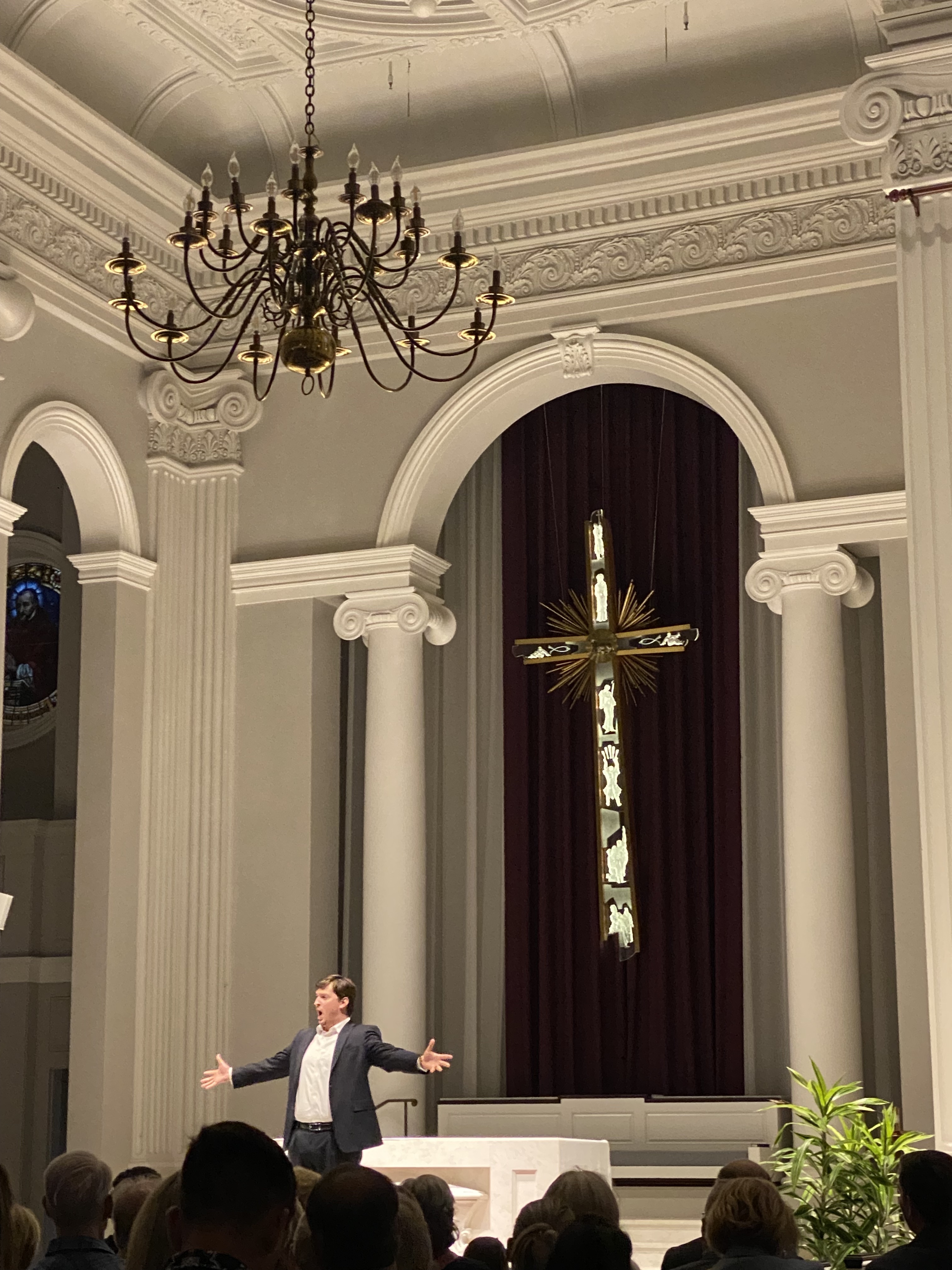
The clear standout of the evening was Michael Mensah, whose bass voice seemed perfectly suited to the vast atmosphere of the church. The guttural German syllables of his selection from Mozart’s Die Entführung aus dem Serail matched his thunderous voice beautifully. It was a bravura display, but one controlled by musical intelligence rather than mere volume. Some of his theatrical touches and gestures, although never silly or excessive, brought a laugh from the audience — this reviewer included — and showed that he understood that opera is not only about singing but also about inhabiting a character.
That was par for the course for many of these talented young singers, namely Ayanna Delk Lewis and Sydney Sorbet, whose excerpt from Bellini’s Norma showed both power and sensitivity. Their voices worked beautifully together, and I would have liked to hear more of them. Their rapport on stage was striking — at times it was difficult to tell where the acting ended and genuine feeling began; they seemed genuinely moved by each other’s performances.
Christopher Gray, in Weber’s Der Freischütz, also made a strong impression, particularly in “Schweig!” His powerful baritone brought real authority to the music.
Xiaofeng Hou, the tenor, had only a brief opportunity to make an impression, appearing in the ensemble (“tutti”) portion of Donizetti’s Lucia di Lammermoor. What little we heard suggested another promising artist, and I would have liked to hear more of him in a solo capacity. The ensemble finale he featured in, “T’allontana, sciagurato,” brought the artists together in a fitting display of dramatic energy.
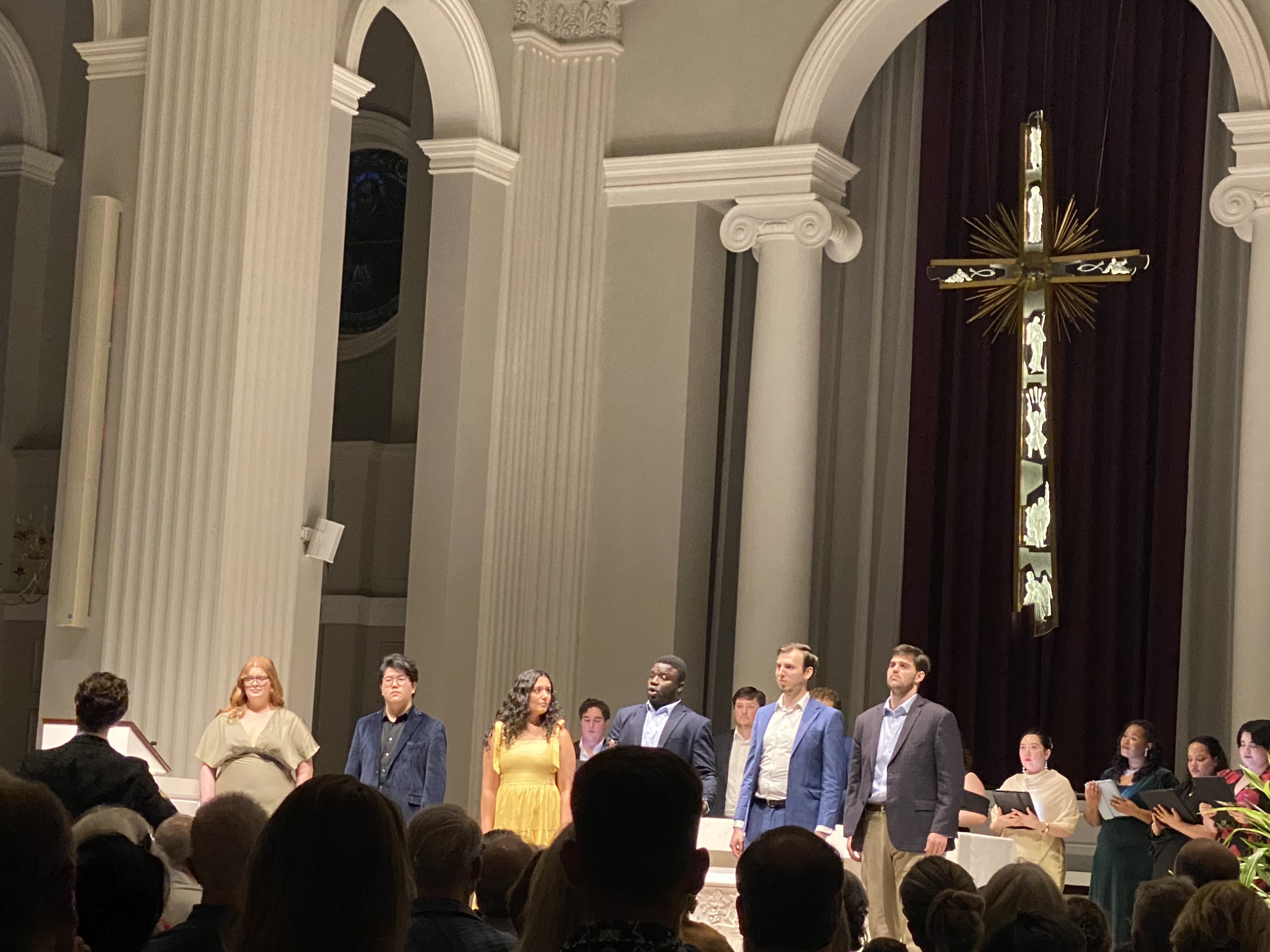
The programming was excellent. The selections ranged across the operatic tradition: Mozart’s Le nozze di Figaro, Don Giovanni, and Die Entführung aus dem Serail; Bellini’s Norma; Handel’s Ariodante; Tchaikovsky’s Eugene Onegin; Massenet’s Werther; and works by Weber, Britten, Gounod, and Donizetti. It was an ambitious and intelligent program that allowed the singers to demonstrate their individual strengths and the breadth required of these rising talents.
There were no slouches in this performance. Every one stood out in some way, and it is tantalizing to imagine what they might accomplish as they embark on professional careers.
Opera is, after all, an acting art as much as a musical one, and these performers understood that. They acted their selections fully, but without the sort of exaggerated melodrama that can sometimes overwhelm opera (see Premesso’s review of La Cenerentola).
The weaker moments for me were the selections from Doctor Atomic and Sunday in the Park with George. Their musical language and dramatic approach did not resonate in the same way as the classics. It could be a matter of taste, although I’ll confess to a one-time dalliance with Adams’ Harmonielehre owing to seeing it in an Italian movie.
Finally, as DC-area residents will understand, the concert was made more memorable by the summer storm that arrived at the end, nixing my plans for the reception and causing me to bolt for safety, as I’d left my umbrella elsewhere.
Gracious of Wolf Trap to offer Washington denizens a completely free concert of outstanding young talent in one of the city’s best neighborhoods. Ben fatto.
Thanks to Washington Classic Review, expertly curated, for listing this and many other fine performances this summer.