Symphony No. 1 in E-flat major, K. 16 (Wolfgang Amadeus Mozart)
Piano Concerto No. 12 in A major, K. 414 (Wolfgang Amadeus Mozart)
Encore: To the Spring (An der Frühling), Op. 43, No. 6 (Edvard Grieg)
Symphony No. 1 in C major, Op. 21 (Ludwig van Beethoven)
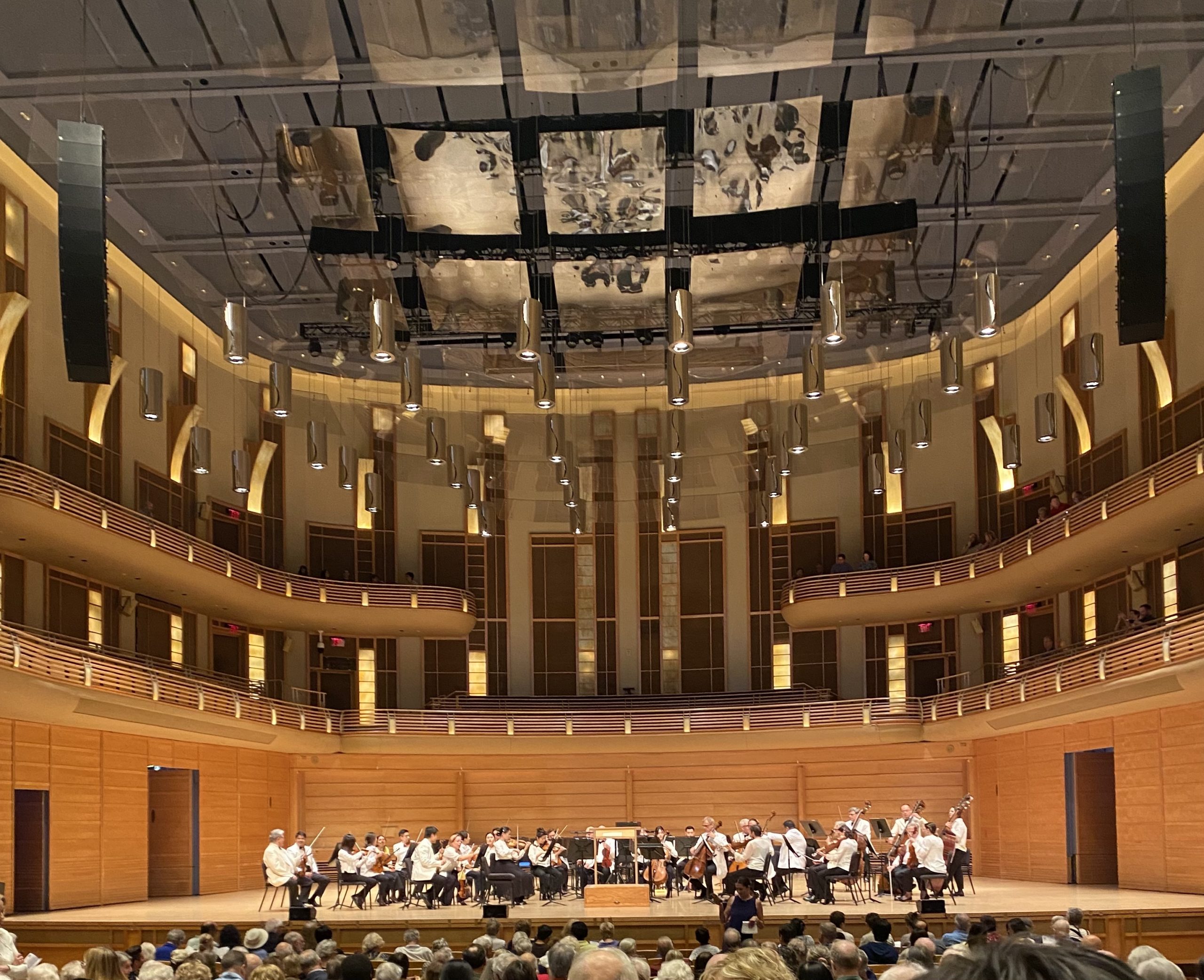
The Baltimore Symphony Orchestra’s Sunday afternoon program paired early Mozart and Beethoven, which seems sensible enough, right?. Fortunately, the BSO has little to prove here. The orchestra was rock solid throughout, and Beethoven’s First Symphony was energetic without becoming overbearing.
Before the performance, conductor Jiannan Cheng offered a brief introduction to the program. I didn’t see the need for this — it reminded me of the didactic guides in the program at the Washington National Cathedral a week earlier, which made me feel like I was already living in a museum of my own culture — but I did learn something, namely that Beethoven’s Symphony No. 1 in C Major begins with a dominant seventh chord that immediately resolves to F major — creating a signature disorienting effect.This made up for the fact that she styled Mozart and Beethoven as the “Beyonce and Taylor Swift” of their day. Please.
The average age could not have been far from 85, with multiple wheelchairs scattered throughout the hall, although I also espied a few people under 40. Compared with the Wolf Trap crowd, however, this audience seemed slightly more refined. There was no heavy pre-show drinking, no catcalling, no sense that anyone had confused a concert with a high school pep rally. Instead, there was the quiet expectancy of people who had come specifically to hear good music.
Mozart’s Piano Concerto No. 12 featured Finnish pianist Juho Pohjonen, whose gifts were immediately apparent. He also indulged us with an encore — Grieg’s miniature from 1886’s third volume of Lyric Pieces, “To the Spring,” which he named in a tone so hushed as to be inaudible. As for the Mozart, I would never endorse napping at a concert, but there is something to be said for closing one’s eyes during a performance. In Mozart especially, removing all distractions allowed the themes to emerge more clearly, and the recurring ideas becoming easier to follow in sensory deprivation
The BSO itself was remarkably assured. Concertmaster Jonathan Carney stood out in the first violin section. The orchestra has the kind of solidity that comes from years of playing together and it made my miss my old days at the Meyerhoff in the early aughts.
That is not to say everyone observed the conventions of concert etiquette. The couple seated beside me was incapable of remaining silent between movements, filling every pause with uncomfortably loud commentary (“that was short! sounded like a waltz to me” after the third Beethoven movement, which is, in fact, in 3/4 time; “he wrote this when he was 13! [sic]” at the end of the whole piece), but I found myself appreciating their total and unabashed enthusiasm. The woman in the pair rocked her head and stomped her feet as if she were at a rock concert and both, despite their advanced age, immediately stood at the end for program-bashing applauding. I couldn’t help but grin — why not? I stood, too.
Strathmore remains one of the area’s great concert venues, a lovely room tucked into a verdant corner of Bethesda. The hall deserves a comment: the construction, and warmth of the wood give it a sense of craftsmanship that is increasingly rare in modern performance spaces, redolent of my best days at Brussels’ Bozar. The acoustics allowing a large (or small, as the case was for the Mozart symphony) orchestra to sound expansive without losing its intimacy or connection to the audience.
The afternoon concluded with Beethoven’s First Symphony, a work too often treated merely as the opening chapter of a much larger story. The BSO wisely avoided searching for the Beethoven who had not yet arrived. Instead, they allowed this symphony to stand on its own terms: witty, energetic, and remarkably confident. It was a great rendition, and a reminder that even Beethoven’s beginnings already contain a fully formed musical personality. All the same, my enthused neighbors couldn’t help but comment, “wow, that sounded like… you know, Beethoven!”
I took the opportunity on the way home to pass through old haunts in Takoma Park and Silver Spring, places I thought I would never see again, stopping to take a setting sun at the Lee Jordan Athletic Field, where one fall many years ago I passed many an evening of hard exercise. It seemed a fitting return, a reminder of another beginning now ended.